
According to industry experts, the consumption of petroleum products in the month of April was only 30-40 per cent of what it had been prior to the lockdown. Due to this, refineries were forced to bring down their capacity too.

'The spirit of cooperation between the Centre and states has been diluted in many ways.' 'The level of consultation which used to be there earlier has reduced significantly.'

The government is looking at tweaking provisions of the Indian Contracts Act of 1872 to bring agreements between farmers and companies under its ambit, aiming to prevent exploitation of farm people.

Later, there may be some tax relief aimed at the middle class and measures to benefit the sectors worst hit by Covid-19 and the resultant nationwide lockdown.

For many the resumption of trains is a big boon, but some say it doesn't come without confusion and worries

No change in retail prices as oil marketing firms to absorb increase

In total, the Centre plans to purchase around 40.7 million tonnes of wheat from farmers this year, which is almost 19 per cent more than last year.

The survivor from Thrissur, who returned from Wuhan -- the epicentre of the pandemic -- recounts her road to recovery and her future plans. Shine Jacob reports

American refiners closed some of their production, leading to futures trade benchmarked to the West Texas Intermediate going negative.

However, experts say that unless clear guidelines are there, it remains to be seen how many people fall within the ambit and who remains excluded.
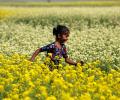
In MP, farmers say sales under new 'Sauda Patrak' method below MSP; Haryana mustard farmers wait for their turn to sell. The annual purchases of major rabi crops in North India largely wheat, mustard and also chana to some extent have been delayed as most cereal mandis were closed in the aftermath of the nationwide coronavirus lockdown.

A recent study shows that more than 100 million people are excluded from the public distribution system because the central government insists on using 2011 population figures to calculate state-wise PDS coverage, which effectively leaves out 100 million people, reports Sanjeeb Mukherjee.
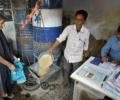
A study by eminent economists, by Jean Drze, Reetika Khera and Meghana Mungikar released few days back shows that more than 100 million people are excluded from the PDS because the central government insists on using 2011 population figures to calculate state-wise coverage under the National Food Security Act.

The stimulus package is expected anytime this week and will be aimed at the urban and rural poor; disadvantaged sections of society; MSMEs and some of the worst-affected sectors.
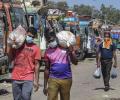
It is likely the government will divide the country into different zones during the proposed extended period of lockdown and might permit a few services to function in safe zones.

There have been several instances of traders dumping fruits and vegetables outside mandis. Or of farmers dumping produce outside their villages or feeding them to their animals.

The agriculture ministry, in the last few weeks, issued guidelines and letters to states to ensure agriculture and food products reach consumers in a timely manner, while farmers don't have to come to the mandis to sell them.

IMD has said the temperature in April-June across most parts in India is expected to be 0.5-1 degrees Celsius warmer than normal. However, doctors and scientists say they haven't found any direct correlation between the speed of COVID-19 spread and warm weather.

While the meetings on Friday were preliminary discussions, it is learnt that sectors like tourism; hospitality; aviation; micro, small and medium enterprises (MSMEs); and livestock have sought deferring loan repayments and temporary tax holidays in specific cases to help them tide over the steep fall in economic activity.

The sale is key to meeting the government's disinvestment target of Rs 2.1 trillion in the financial year 2020-21. So far, the disinvestment exercise has fetched the government Rs 34,845 crore during the current financial year.
 © 2025 Rediff.com - Investor Information - Advertise with us - Disclaimer - Privacy Policy - Sitemap - Feedback - About us - Terms of use - Grievances